The best sample pack is not the one with the biggest download. It is the pack that helps you find the right sound before the idea loses momentum. A useful library gives you dependable core drums, a few distinct colors and enough organization to make decisions quickly.
This guide explains what sample packs for music producers should contain, how to judge them before they enter your main library and how to build a compact setup that works in any DAW.
Start with a dependable core, not endless options
Your core library should cover the sounds you reach for in almost every session: clean kicks, snares and claps; closed and open hats; percussion; cymbals; bass and 808 one-shots; and a small set of effects. These files do not need to be extreme. They need to be easy to audition, tune and layer.
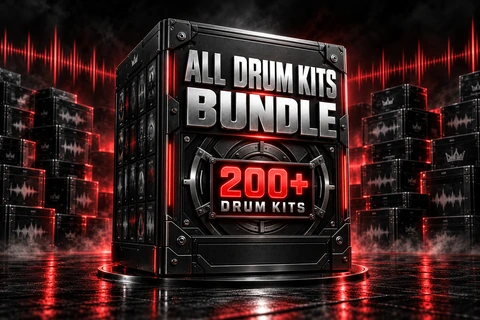
A multi-genre collection can be useful at this stage because it gives you several drum languages without forcing you to search ten unrelated folders. The All Drum Kits Bundle is the broadest public option in the store, while the drum kit bundles collection lets you compare smaller grouped libraries.
What earns a place in the core folder?
- Short, controlled kicks that leave room for bass.
- Snares and claps with clearly different weight, width and texture.
- 808s with audible pitch and enough tail to shape.
- Hats that include tight, loose and textured choices.
- Files named clearly enough to browse without stopping the beat.
Know the difference between one-shots and loops
One-shots give you control. You decide the rhythm, velocity, pitch and envelope, so they are ideal for drums, 808s and melodic hits that must follow your arrangement. Loops are faster starting points. They can introduce movement, harmony or texture that would take longer to build from scratch.
The best workflow uses both without confusing their jobs. Build the rhythmic identity with one-shots, then use loops as raw material: slice them, reverse a section, change the key or keep only the atmosphere. A loop should start an idea, not dictate the whole record.
If you want melodic material to reshape, browse the focused loop kits and sample packs. Producers who mainly need drums should begin with a genre collection instead.
Choose genre vocabulary before pack size
A trap folder, a boom bap crate and a drill kit can all contain kicks and snares, but the useful differences are in envelope, tuning, texture and rhythmic context. Trap often needs clean transients and flexible 808s. Boom bap benefits from body, room and imperfect texture. Drill needs bass slides, short drums and percussion that supports syncopation. Phonk may require saturated cowbells and deliberately rough drums.
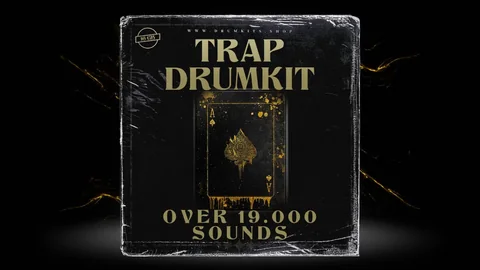
That is why a smaller genre-specific pack can be more productive than a huge random folder. If you already know the direction, go directly to the Trap Drum Kits, Drill Drum Kits, Boom Bap Drum Kits or Phonk Drum Kits collection.
Test samples in context
A loud preview can make almost any drum sound impressive. The real test is whether the sound works at your tempo, in your key and beside the other elements. Load a kick, snare, hat and bass into a blank project. Build eight bars quickly, then lower the channel levels so loudness does not decide the comparison.
- Check whether the kick and 808 occupy different parts of the low end.
- Pitch the 808 across at least one octave and listen for unstable notes.
- Shorten the snare and hat envelopes to see whether the files remain clean.
- Layer only when each layer has a separate job.
- Listen quietly; weak transients and masking become easier to notice.
If a pack produces a balanced rough loop with minimal repair, it is more valuable than a folder that needs heavy processing on every sound.
Build a three-layer sample library
A practical library can be divided into three layers. The first is your favorites folder: a small set of trusted drums you can reach in seconds. The second is genre folders for deliberate changes in character. The third is an archive that stores everything else outside your immediate browser.
This prevents choice overload without deleting useful material. Review new packs before merging them into your favorites. Copy only the sounds that fill a real gap, and keep the original pack intact in the archive so licenses and source context are easy to find.
A simple buying checklist
- Does the pack solve a specific gap in your current library?
- Does it match the genre and tempo range you actually produce?
- Can you hear or inspect enough detail to judge the material?
- Will the naming and folder structure speed up browsing?
- Are you buying distinct sounds or duplicates of what you already use?
What most producers actually need in 2026
You do not need a separate pack for every beat. You need reliable fundamentals, one or two genre-focused libraries and a controlled source of fresh inspiration. Start with drums that translate, add a focused loop pack when harmony or texture is the bottleneck, and expand only when you can name the missing sound.
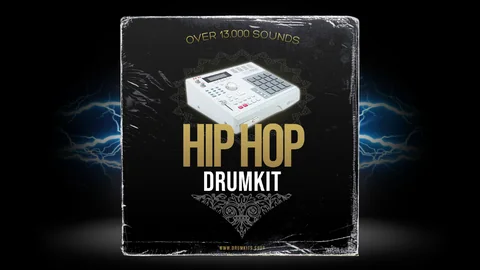
For a broad starting library, compare the Hip Hop Drum Kit, the Trap Drum Kit and the complete bundle below. Then create a short favorites folder inside your DAW instead of browsing the entire download during every session.
A 30-day rule for new packs
Give every new pack a short trial period instead of merging it immediately into your permanent library. During the first week, make two quick ideas using only its core drums. During the next sessions, combine its strongest sounds with your existing favorites. At the end of 30 days, keep only files that solved a problem or created a result you would use again.
This creates evidence for future buying decisions. You may learn that you use short 808s more often than long ones, or that your library lacks dry snares rather than another folder of effects. Write those gaps down. The next pack should answer that list.
Conclusion
The right sample packs reduce decisions and leave more attention for rhythm, arrangement and emotion. Judge a pack by how quickly it helps you make a convincing eight-bar idea, not by its headline size. Keep the strongest sounds close, archive the rest and let your library grow around real production needs.