FL Studio’s Piano Roll becomes useful for drums when the step grid is no longer expressive enough. It gives each hit an exact start, length, pitch and velocity, which is ideal for rolls, tuned percussion and detailed ghost notes.
More control does not mean every note should be edited. Keep structural hits simple, then use the Piano Roll where articulation changes the groove.
The short answer
FL Studio’s Piano Roll becomes useful for drums when the step grid is no longer expressive enough. It gives each hit an exact start, length, pitch and velocity, which is ideal for rolls, tuned percussion and detailed ghost notes.
More control does not mean every note should be edited. Keep structural hits simple, then use the Piano Roll where articulation changes the groove.
What matters before you start
Zoom before editing
A clear view of the phrase prevents accidental micro-movements and overlapping notes.
Match note length to the instrument
One-shots may ignore MIDI length unless an envelope is active, while sustained 808s and gated samples depend on it.
Keep rolls readable
A roll should lead into or answer an accent. Random dense notes rarely create useful momentum.
A practical workflow
- 1. Move one lane at a time
Open the sound that needs detailed control rather than transferring the whole kit immediately.
- 2. Set a useful snap value
Choose a grid that supports the intended subdivision, then use finer movement only for deliberate offsets.
- 3. Draw the main accents first
Place the notes that define the phrase and keep their velocity stable.
- 4. Add roll notes between accents
Use spacing and velocity to create a clear approach or release. Avoid a solid wall of identical notes.
- 5. Edit articulation
Adjust note length, pitch or pan only where the sampler responds and the musical result is audible.
- 6. Compare with quantized timing
Toggle between the edited and stricter version at equal loudness. Keep the changes that improve motion without weakening impact.
Common problems and how to fix them
Using tiny grid values too early
Fine resolution can hide the basic pulse. Build the phrase on a larger grid first.
Overlapping sustained notes unintentionally
Long notes can create bass clashes or choke behavior. Check note ends, especially for 808s.
Drawing perfect velocity ramps everywhere
Mechanical ramps become another predictable pattern. Shape velocity around accents and listening context.
A focused practice exercise
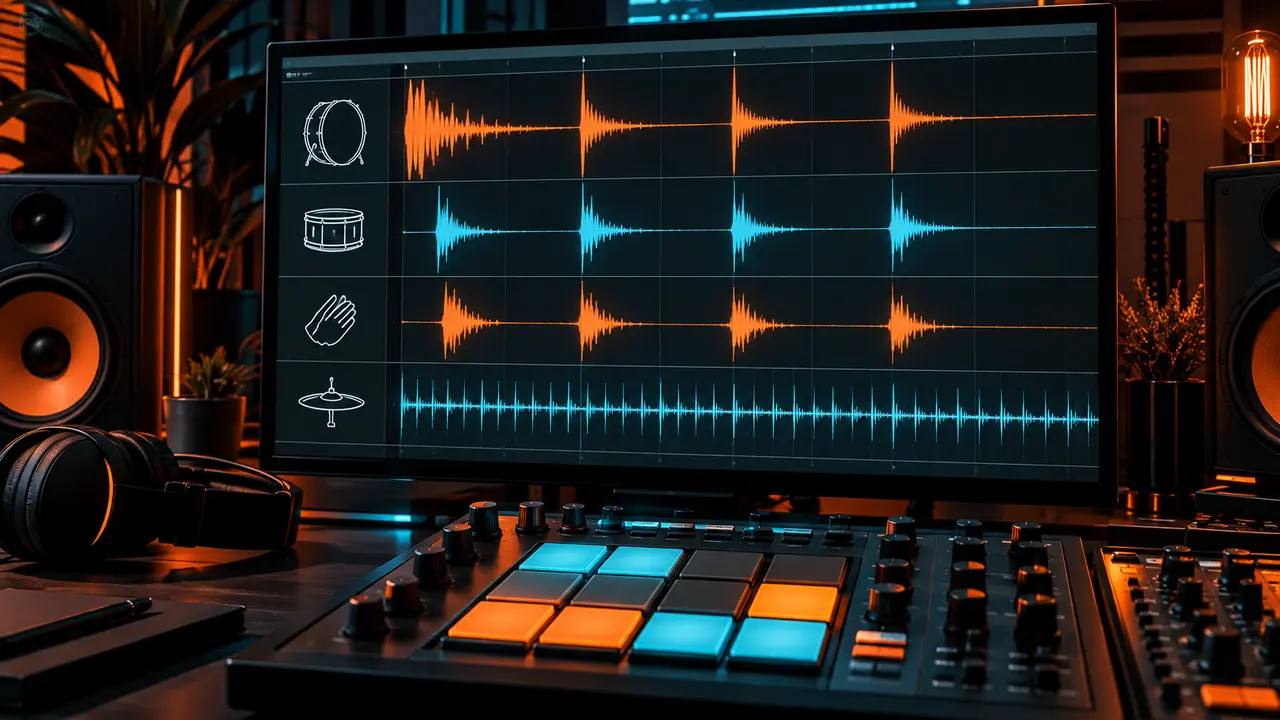
Program a one-bar snare or hi-hat phrase, then create three variations: straight, slightly delayed support notes, and a short accelerating roll. Render or loop them against the same melody and identify which timing choice changes the feel most.
How to make the decisions in context
FL Studio Piano Roll Drums: Timing, Rolls and Note Length is easier to apply when every move answers a musical problem. Before changing anything, play the relevant section from a few bars before the change to a few bars after it. That longer window reveals whether the result supports the phrase, transition and energy of the track. A choice that sounds impressive in a short solo loop can still weaken the full arrangement. Keep the level matched as closely as practical so a louder version does not win by default.
Start with zoom before editing. A clear view of the phrase prevents accidental micro-movements and overlapping notes. Treat that as the control condition for the session. Make one clear change, replay the same passage and write down what improved: timing, separation, impact, movement or speed of use. If the benefit cannot be named or heard consistently, return to the simpler version. This keeps the workflow connected to the primary goal: use the piano roll for detailed drum timing and articulation.
Next, check match note length to the instrument. One-shots may ignore MIDI length unless an envelope is active, while sustained 808s and gated samples depend on it. Listen once at the normal working level, once quietly and once with the whole beat playing. Quiet playback is useful for judging hierarchy because the strongest rhythmic roles remain obvious while decorative details recede. Full-context playback shows whether the technique competes with bass, melody, vocals or effects.
Finally, use keep rolls readable as the restraint test. A roll should lead into or answer an accent. Random dense notes rarely create useful momentum. Duplicate the pattern, channel or project state before a larger edit so the original remains available for comparison. The point is not to avoid experimentation; it is to make experiments reversible and easy to judge. Commit only when the edited version works in more than one listening context.
This decision process also makes collaboration clearer. Instead of saying a version is simply “better,” describe the function of the change: the backbeat reads sooner, the low end leaves more headroom, the fill announces the next section, or the library is faster to navigate. Functional language helps another producer understand the intention and reproduce the result without copying arbitrary settings.
A second-pass review that catches weak choices
After completing the first workflow, take a short break and begin the review from move one lane at a time. Open the sound that needs detailed control rather than transferring the whole kit immediately. Do not immediately edit while the track is playing. First identify the exact moment where the result stops supporting the music, then make the smallest change that addresses that moment. This prevents a local problem from turning into an unnecessary redesign of the whole pattern or setup.
At the middle of the process, revisit add roll notes between accents. Use spacing and velocity to create a clear approach or release. Avoid a solid wall of identical notes. Compare the section before and after that step at the same start point. If the technique improves one element but creates a new conflict elsewhere, solve the conflict at its source rather than stacking corrective processing. Fewer deliberate moves are easier to recall, automate and revise later.
The final review should include compare with quantized timing. Toggle between the edited and stricter version at equal loudness. Keep the changes that improve motion without weakening impact. Then test the result in at least two arrangement sections. A loop can hide repetition, tail overlap and transitions that only become obvious across a complete phrase. If the article's workflow is organizational rather than sonic, close and reopen the project or preset and confirm that files, names and routing still resolve as expected.
Watch specifically for “Using tiny grid values too early.” Fine resolution can hide the basic pulse. Build the phrase on a larger grid first. Also check for “Overlapping sustained notes unintentionally.” Long notes can create bass clashes or choke behavior. Check note ends, especially for 808s. These are useful failure tests because they focus attention on behavior, not on a screenshot or a fixed plug-in value. If either problem appears, step back to the last version that worked and change one variable at a time.
Save the successful version with a useful name and enough context to understand it later. For a pattern, that can mean tempo and section role; for a rack or template, it can mean instrument purpose and version; for an export, it can mean song, stem role and revision. Clear versioning is part of production technique because it lets you experiment without losing a reliable result.
Session checklist
Use this short order when practicing FL Studio Piano Roll drums. It is a reminder, not a rule: skip a checkpoint only when the track gives you a clear reason.
- Move one lane at a time
- Set a useful snap value
- Draw the main accents first
- Add roll notes between accents
- Edit articulation
- Compare with quantized timing
Finish by bypassing or comparing the complete change, not just its final component. Confirm that the result still serves the original intent, survives a quiet playback pass and remains understandable when the project is reopened. If it does, stop editing and move to the next musical decision.
Useful next reads
Keep the next session focused with these related DRUMKITS.SHOP guides and resources:
Frequently Asked Questions
Does note length matter for every drum sample?
Not always. It depends on the instrument and envelope settings. Listen and verify instead of assuming.
How do I make rolls sound less mechanical?
Use an intentional velocity contour, leave space around the destination accent and avoid repeating the exact same roll.
Should all drum notes be quantized?
No. Quantization is a reference. Structural hits may stay strict while supporting notes move slightly.
Can the Piano Roll tune percussion?
Yes when the loaded instrument responds to note pitch, but verify the sample’s root note and musical role.
Conclusion
Use the Piano Roll to clarify articulation, not to decorate every empty space. Exact control is most valuable when it supports a simple rhythmic idea.